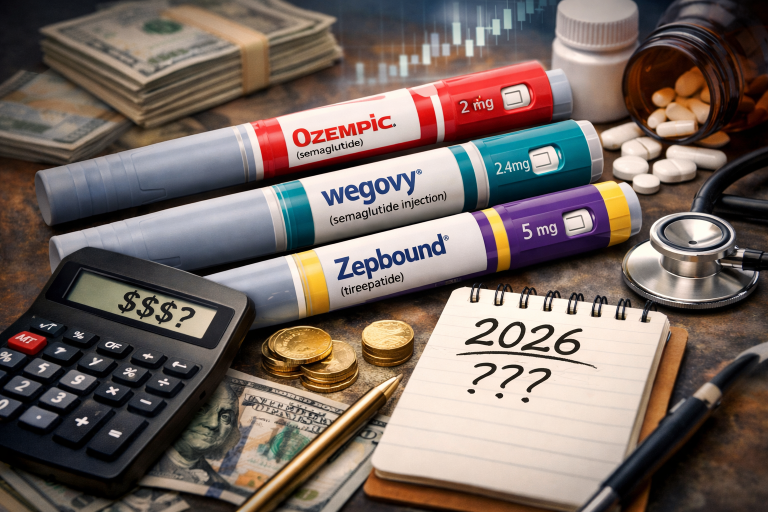
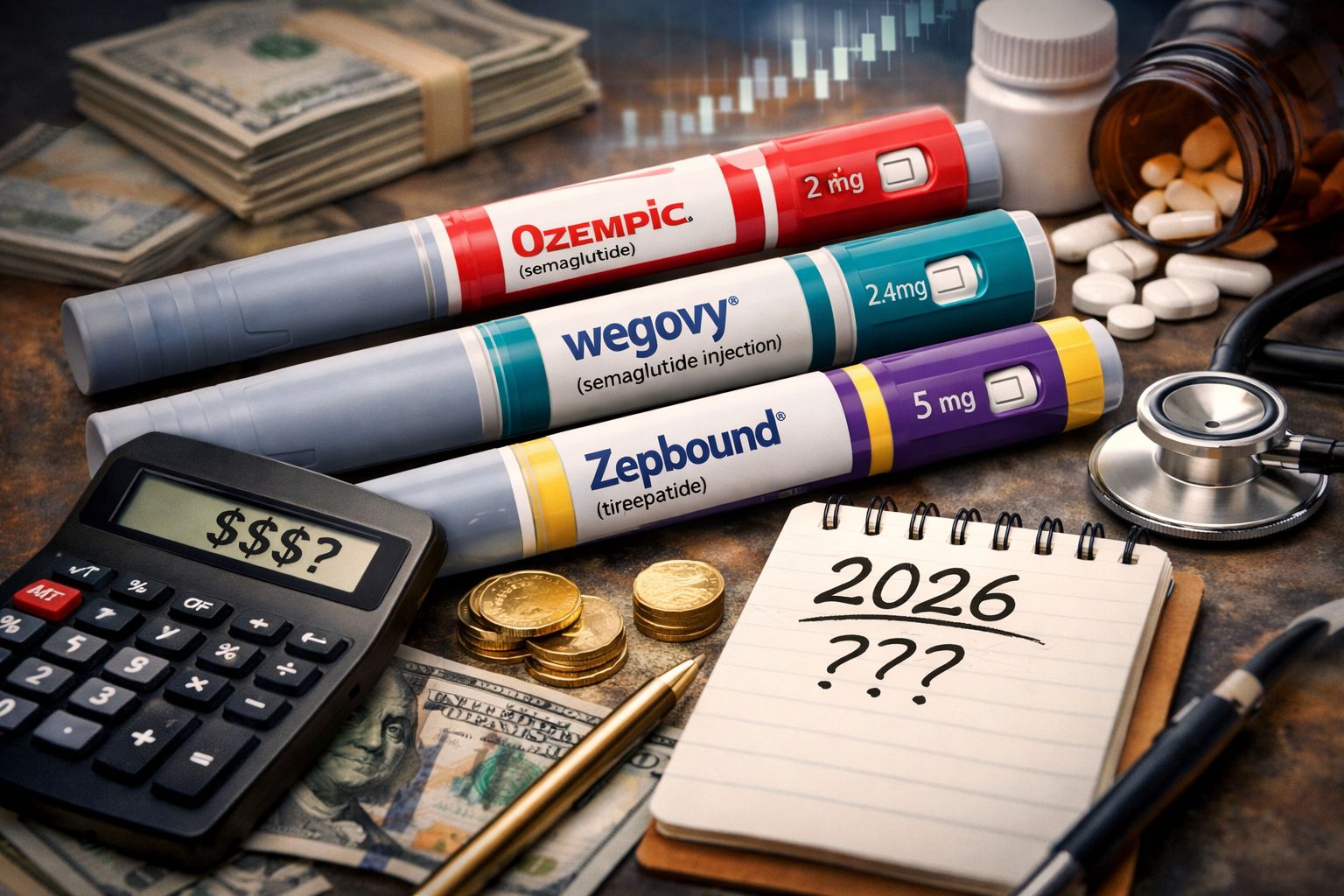
If you’ve been watching GLP-1 drug prices from the sidelines — waiting for them to become actually affordable — 2026 might be the year you stop waiting.
Prices have dropped. New programs have launched. A pill version of Wegovy now exists. And depending on your situation, your monthly cost could be anywhere from $50 to over $1,000. The difference comes down to insurance, which drug, which program, and which pharmacy you use.
This guide cuts through the noise and gives you the real numbers — updated for 2026 — so you can figure out exactly what you’d pay.
👉 Use Decimaly’s GLP-1 Cost Calculator to estimate your total cost →
Why GLP-1 Prices Are Finally Falling in 2026
For years, drugs like Ozempic and Wegovy sat at a list price of over $1,000 per month — making them financially out of reach for millions of people who needed them most.
That’s been changing fast.
Both Novo Nordisk and Eli Lilly have been offering their GLP-1 medications at discounted direct-pay prices, competing with the growing compounded drug market. NBC News Then in late 2025, things accelerated: the Trump administration struck a deal with the two leading GLP-1 manufacturers to lower consumer prices, with drugs available through a new direct-to-consumer platform called TrumpRx. AARP
Starting doses of GLP-1 pills are now expected to cost as little as $149 a month for cash-paying patients, compared with $349 or more for injections. George Washington University
That’s still not cheap. But it’s a world away from $1,300.
2026 GLP-1 Drug Price Breakdown: Drug by Drug
Ozempic (semaglutide — diabetes label)
Ozempic is technically approved for type 2 diabetes, not weight loss — but it’s widely prescribed off-label. Novo Nordisk announced cuts of around 50% to Ozempic’s price for insured patients who pay based on the drug’s list price. Deseret News For self-pay patients, prices through direct programs have fallen significantly.
What you’ll pay in 2026:
- With insurance (diabetes diagnosis): often $25–$60/month copay
- Cash pay via NovoCare or TrumpRx: ~$199–$350/month
- Without any program: $1,000+/month list price
Wegovy (semaglutide — weight loss label)
Wegovy is the FDA-approved weight loss version of the same active ingredient in Ozempic. It comes in higher doses and is specifically indicated for obesity (BMI 30+) or overweight with a related condition.
Novo Nordisk cut Wegovy’s price by around 35% for insured patients, and launched a self-pay option at $199 per month. Deseret News And now there’s something new: the FDA approved the first GLP-1 weight loss pill — oral Wegovy — in December 2025, indicated for people with obesity (BMI 30+). National Consumers League
What you’ll pay in 2026:
- Wegovy injection, cash pay (NovoCare/TrumpRx): ~$199–$350/month
- Wegovy pill (oral), cash pay: ~$149–$150/month for starting doses
- With insurance covering obesity: varies widely — check your plan
- Without any program: $1,300+/month list price
Zepbound (tirzepatide — weight loss label)
Zepbound is Eli Lilly’s weight loss drug and is widely considered the most effective GLP-1 currently available, with clinical trials showing greater average weight loss than semaglutide-based options.
Following Novo Nordisk’s pricing moves, Lilly responded by further cutting Zepbound’s price through its direct-to-consumer LillyDirect platform. Deseret News
What you’ll pay in 2026:
- Via LillyDirect (cash pay): ~$349–$499/month depending on dose
- Via TrumpRx: ~$350/month
- With insurance: varies — some plans cover it, many still don’t
- Without any program: $1,000+/month list price
Mounjaro (tirzepatide — diabetes label)
Mounjaro is Zepbound’s sister drug — same molecule, different FDA approval (diabetes, not obesity). Often prescribed off-label for weight loss. Pricing similar to Zepbound when purchased through direct programs.
The New Ways to Pay in 2026
TrumpRx
TrumpRx is a new direct-to-consumer platform that connects people to drugmakers’ discount websites. It doesn’t sell drugs directly but simplifies access for uninsured or underinsured patients. AARP Prices through TrumpRx are expected to land around $300–$400 monthly for cash-pay patients. Grandhealthpartners
Medicare & Medicaid (Big Changes in 2026)
This is huge news for older and lower-income Americans. Starting July 2026, eligible Medicare Part D beneficiaries can access GLP-1 drugs at just $50 a month through a new CMS payment demonstration. National Consumers League The BALANCE Model — a larger voluntary program — will launch in Medicaid as early as May 2026 and in Medicare Part D in January 2027. National Consumers League
If you’re on Medicare or Medicaid, this is worth tracking closely.
Retail Programs (Costco, Walmart)
Costco sells Wegovy and Ozempic for $499 a month for cash-paying customers, and Walmart has rolled out a comparable arrangement with Lilly for Zepbound. NBC News Not the lowest price available — but convenient if you’re already a member.
Manufacturer Direct Programs
Both Lilly (LillyDirect) and Novo Nordisk (NovoCare Pharmacy) sell directly to patients without going through insurance. These are currently among the best cash-pay options available and don’t require insurance approval.
What About Compounded GLP-1s?
During the drug shortages of 2024–2025, compounding pharmacies stepped in with cheaper versions of semaglutide and tirzepatide — often through telehealth companies — at prices as low as $100–$200/month.
The shortage has since resolved, and the original brand-name manufacturers argue that compounding now violates their exclusive rights to the drugs. NPR The FDA has issued warnings about compounded versions, and legal battles are ongoing.
If you’ve been using compounded GLP-1s, it’s worth checking the current regulatory status before your next refill — the landscape is shifting quickly.
The Real Cost Nobody Talks About: The 12-Month Total
Monthly prices are one thing. But GLP-1 drugs aren’t typically a one-month fix — most clinical guidelines suggest staying on them long-term to maintain results. That changes the math significantly.
At $350/month, your annual cost is $4,200. At $199/month, it’s $2,388. At $50/month (Medicare), it’s $600.
And if your insurance doesn’t cover it and you’re paying list price? You could be looking at $12,000–$15,600 per year.
That’s the number worth planning around — not just the monthly figure on the label.
Use Decimaly’s GLP-1 Cost Calculator to see your actual projected cost, factoring in your insurance status, chosen drug, and how long you plan to stay on treatment.
👉 Calculate your total GLP-1 cost → decimaly.com/glp-1-cost-calculator
Will Prices Keep Falling?
Almost certainly — yes.
Several oral GLP-1 options are in late-stage trials and expected to reach the market, potentially at even lower price points. AARP Competition between Lilly and Novo Nordisk is already driving prices down faster than anyone predicted two years ago. And with Medicare/Medicaid coverage expanding, the pressure on list prices will only increase.
With prices expected to drop significantly, GLP-1s could move from being an elite treatment option to an accessible mainstream tool for obesity management. Grandhealthpartners
The question isn’t really whether they’ll get cheaper. It’s whether you want to wait another year or two — or explore what’s available to you right now.
Frequently Asked Questions
How much does Ozempic cost per month in 2026 without insurance?
Through direct cash-pay programs like NovoCare or TrumpRx, Ozempic is available for around $199–$350/month. Without any discount program, the list price remains over $1,000/month.
Is Wegovy covered by insurance in 2026?
It depends on your plan. Coverage for weight loss medications (as opposed to diabetes) has actually become more restrictive at many private insurers in 2025–2026 — some now require a BMI over 40. Medicare coverage is expanding through mid-2026 programs, but check your specific plan.
What is the cheapest GLP-1 drug right now?
Oral Wegovy (the pill) starts at around $149/month for cash-paying patients — currently the lowest entry point for an FDA-approved GLP-1 weight loss medication.
What is TrumpRx and how does it work?
TrumpRx is a government-backed platform that connects uninsured or underinsured patients directly to manufacturer discount programs. It doesn’t sell drugs itself — it’s essentially a referral hub to cash-pay pricing from Lilly and Novo Nordisk.
Can I still get compounded semaglutide in 2026?
The regulatory environment for compounded GLP-1s has tightened significantly. With drug shortages resolved, the FDA has signaled it will restrict compounding. Availability varies — check current FDA guidance before seeking compounded versions.
How long do you have to take GLP-1 drugs?
Most evidence suggests that stopping GLP-1 drugs leads to weight regain for many people. Long-term use is increasingly viewed as standard — which is exactly why calculating your annual and multi-year cost matters more than just the monthly figure.
The Bottom Line
GLP-1 drug prices in 2026 are the most varied they’ve ever been — and that’s actually good news. Depending on your insurance, your drug of choice, and which program you use, you could pay anywhere from $50 to over $1,000 a month for the same class of medication.
The people who end up overpaying are usually the ones who didn’t know all their options.
So before you commit to any program or prescription — run the numbers. Know your 12-month total. Compare the drugs. And make sure you’re not leaving money on the table with a program you didn’t know existed.
👉 Use Decimaly’s free GLP-1 Cost Calculator → decimaly.com/glp-1-cost-calculator